Ka-Bar Knife Scroll Laser Cut Design: A Guide to Precision and Elegance in Custom Craftsmanship
Custom knife making is an art form that balances rugged utility with aesthetic refinement. For makers looking to elevate their work, the Ka-Bar Knife Scroll Laser Cut Design offers a sophisticated pathway to professional-grade detailing. Whether you are working with leather handles, wooden scales, or metal bolsters, integrating intricate scrollwork can transform a functional tool into a heirloom piece. However, the transition from downloading a digital file to achieving a flawless physical result is often fraught with subtle technical pitfalls. Understanding these nuances is essential for both hobbyists and professional engravers who wish to avoid wasted materials and unsatisfactory outcomes.
Understanding the Value of Vector Precision
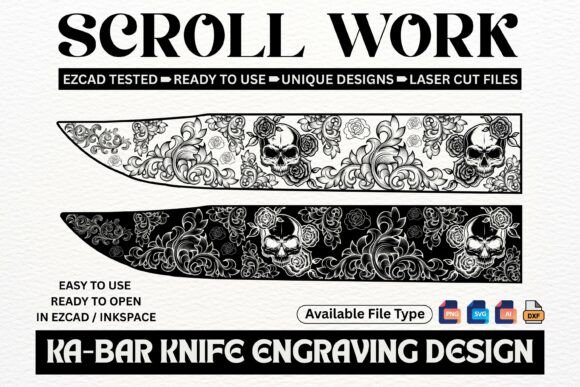
The appeal of the Ka Bar Knife Scroll Laser Cut Design lies in its versatility and intricacy. Designed specifically for laser engraving and CNC machining, this digital asset provides the clean lines necessary for crisp, detailed results on small surfaces like knife handles. Unlike generic patterns, this design is tailored to complement the classic proportions of Ka-Bar style knives, ensuring that the scrollwork enhances rather than overwhelms the blade’s profile.
Many creators mistakenly assume that any decorative file will work equally well across different materials. This is a critical oversight. The difference between a muddy, burnt engraving and a sharp, elegant cut often comes down to the quality of the source file. High-quality vector formats such as SVG, AI, or DXF are non-negotiable for precision work. These formats allow your software—whether it be LightBurn, EZCAD, or Adobe Illustrator—to interpret paths accurately, ensuring that the laser follows the intended trajectory without deviation. Relying on low-resolution raster images can lead to pixelation and inconsistent depth, ruining the visual impact of the scrollwork.
Common Mistakes in File Preparation and Software Setup
One of the most frequent errors beginners make is neglecting to check the scale and units of the downloaded design before sending it to the machine. A Ka-Bar Knife Scroll Laser Cut Design might look perfect on your screen, but if the dimensions are off by even a millimeter, it may not fit the curvature of the handle or could encroach on ergonomic grip areas. Always verify the dimensions in your preferred software, such as Inkscape or Illustrator, before importing the file into your laser controller.
Another common misunderstanding involves the complexity of the design relative to the material thickness. Intricate scrollwork requires fine detail, which can be challenging to achieve on thick leather or dense hardwoods if the laser settings are not optimized. Users often attempt to cut through thick materials in a single pass, resulting in charring and loss of detail. Instead, adopt a multi-pass approach with lower power settings. This method preserves the integrity of the delicate curves and prevents heat buildup that can distort the surrounding material.
Material Selection and Surface Preparation
The choice of material significantly influences the final appearance of the engraving. While the design is compatible with wood, metal, and leather, each substrate reacts differently to laser energy. For leather tooling and embossing, ensure the surface is clean and free of oils or finishes that might resist engraving or cause uneven burning. Untanned or vegetable-tanned leathers typically yield the best contrast and depth for scroll designs.
When working with metal, such as aluminum or stainless steel blades, remember that standard CO2 lasers cannot cut metal but can mark it with specialized coatings or using fiber lasers. If you are using a coating method, apply it evenly to avoid patchy results. For wood, select species with tight grains, such as maple or cherry, which allow the intricate lines of the Ka Bar Knife Scroll Laser Cut Design to stand out clearly. Open-grained woods like oak may absorb the laser energy unevenly, leading to a less defined image.
Optimizing Workflow for Professional Results
To maximize efficiency and quality, consider the following practical steps before beginning your project:
- Test on Scrap Material: Always run a test piece using the same material and thickness as your final project. This allows you to fine-tune speed and power settings without risking your main piece.
- Check Node Density: In vector software, inspect the nodes of the SVG or DXF file. Excessive nodes can cause the laser to stutter or slow down unnecessarily, affecting the smoothness of the curves. Simplify paths where possible to ensure fluid motion.
- Secure Your Workpiece: Vibrations during engraving can blur fine details. Use appropriate jigs or masking tape to hold knife handles or leather pieces firmly in place.
- Maintain Your Lens: A dirty lens scatters the laser beam, reducing precision and increasing the risk of fire. Clean your lens before every session involving detailed work like scroll engraving.
By addressing these technical aspects, you ensure that the elegance of the design is fully realized in the physical product. The goal is not just to add decoration, but to enhance the perceived value and craftsmanship of the item. A well-executed scroll pattern can differentiate a mass-produced item from a bespoke creation, appealing to collectors and enthusiasts who appreciate attention to detail.
Evaluating Digital Downloads for Long-Term Utility
When purchasing digital assets like the Ka-Bar Knife Scroll Laser Cut Design, it is important to recognize that you are buying a tool, not a finished product. The value lies in the flexibility and reusability of the file. Ensure that the download includes multiple formats (PNG, SVG, AI, DXF) to guarantee compatibility with various software ecosystems. A file that works seamlessly in LightBurn should also be editable in CorelDraw or Adobe Illustrator without requiring complex conversion processes.
Additionally, consider the licensing terms. If you plan to sell items featuring this design, verify that the purchase includes commercial use rights. Many creators overlook this step, leading to potential legal issues down the line. Reputable sellers clearly state usage permissions, allowing you to integrate the design into your product line with confidence.
Ultimately, the success of your project depends on the synergy between design quality, material selection, and machine calibration. The Ka Bar Knife Scroll Laser Cut Design provides a robust foundation for creating stunning, professional results. By avoiding common pitfalls and adhering to best practices in laser engraving and CNC machining, you can consistently produce high-quality custom knives and accessories that stand out in the marketplace. Take the time to refine your process, and let the intricate beauty of the scrollwork speak to the skill and care invested in every piece.