Sliding Lid Tarot Card Box
The ritual of shuffling and drawing cards is deeply personal, yet the storage we often accept for these sacred tools is surprisingly mundane. A flimsy cardboard box that warps with humidity or a generic tin that rattles on the shelf fails to honor the intention behind the practice. This is where the concept of a Sliding Lid Tarot Card Box transforms from a simple container into an essential component of the reader’s experience. It bridges the gap between functional protection and aesthetic reverence, offering a tactile satisfaction that enhances the daily interaction with the deck.
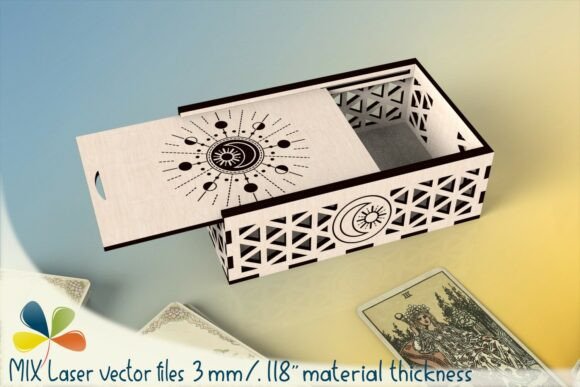
For creators, designers, and spiritual practitioners alike, this design represents more than just woodworking or digital fabrication. It is an exercise in precision, material appreciation, and symbolic expression. By utilizing laser-cutting technology, one can produce a box that is not only durable but also intricately detailed, featuring engraved esoteric symbols and decorative cut-out patterns that reflect the mystic nature of the cards within.
Precision Meets Mysticism in Design
The appeal of this specific box design lies in its engineered simplicity. The sliding lid mechanism is a classic joinery technique that, when executed with modern laser precision, offers a smooth, friction-fit closure without the need for hinges or magnets. This seamless integration creates a clean exterior profile, allowing the focus to remain on the surface details.
Designed specifically for 3 mm materials—such as plywood, MDF, or acrylic—the structure is robust enough to protect a standard tarot deck while remaining lightweight. The external dimensions of 88×142×35 mm are calculated to accommodate the vast majority of traditional tarot decks, ensuring a snug fit that prevents cards from shifting during transport. This attention to dimensional accuracy is crucial; a box that is too loose feels cheap, while one that is too tight risks damaging the cards or the box itself upon insertion.
The visual language of the box is equally important. Engraved esoteric symbols—whether they be planetary glyphs, zodiac signs, or alchemical icons—add a layer of meaning that resonates with the user. Decorative cut-out patterns do not merely serve an ornamental purpose; they introduce texture and shadow play, turning the box into a dynamic object that changes appearance depending on the lighting. For the laser-cutting enthusiast, this provides a fantastic opportunity to experiment with vector line weights and engraving depths to create contrast and visual interest.
Creative Applications for Makers and Entrepreneurs
For small business owners and entrepreneurs in the metaphysical niche, offering a high-quality storage solution can significantly elevate brand perception. A Sliding Lid Tarot Card Box is not just a product; it is an upsell opportunity, a gift-with-purchase incentive, or a standalone item for collectors who own multiple decks. Because the design relies on ready-to-use vector files, production can be scaled efficiently. You can produce batches quickly, maintaining consistency across every unit, which is vital for building a reputable brand.
Consider the customization potential. While the base design fits standard decks, the aesthetic can be adapted to suit different target audiences. For a modern, minimalist crowd, you might choose a clean birch plywood with subtle geometric engravings. For a more gothic or traditional audience, dark-stained wood with intricate occult symbols might be more appropriate. The sliding lid mechanism remains constant, but the surface treatment allows for endless variation.
Educators and workshop leaders can also utilize this project as a teaching tool. It introduces students to the principles of kerf compensation, material selection, and assembly logic. Building a box that slides perfectly requires an understanding of tolerances—a practical lesson in engineering that results in a beautiful, tangible outcome. It demonstrates how digital design files translate into physical objects, bridging the gap between computer-aided design (CAD) and hands-on craftsmanship.
Material Selection and Finishing Techniques
The choice of material fundamentally alters the character of the final piece. While 3 mm plywood is the most common choice due to its strength and ease of cutting, other materials offer unique benefits. Acrylic, for instance, allows for translucent effects, especially if internal lighting is added or if the box is placed near a window. The light passing through the decorative cut-outs can cast intricate shadows, enhancing the mystical ambiance of a reading space.
Finishing is where the project truly comes to life. Raw laser-cut edges often have char marks, which can be sanded lightly for a cleaner look or left as-is for a rustic, industrial aesthetic. Staining the wood can highlight the grain and deepen the color, making engraved symbols pop through contrast. Alternatively, painting the interior of the box in a bold color can create a surprising reveal when the lid is slid open, adding an element of delight to the user experience.
It is important to consider the longevity of the finish. Tarot decks are handled frequently, and the box will be opened and closed regularly. Using a durable sealant, such as polyurethane or beeswax, protects the wood from oils transferred from hands and ensures the sliding mechanism remains smooth over time. Avoid overly thick coatings that might alter the dimensions of the parts, potentially causing the lid to stick.
Tailoring the Experience for Different Users
Different users interact with their tarot decks in different ways, and the storage solution should reflect those habits. For the traveling reader, durability and security are paramount. A tightly fitted sliding lid ensures that cards do not spill out in a bag. For the home practitioner who displays their deck on an altar, the visual appeal is primary. In this context, the engraved symbols and cut-out patterns serve as part of the decor, contributing to the sacred atmosphere of the space.
Freelance designers can use this project to showcase their versatility. By creating variations of the Sliding Lid Tarot Card Box, they can demonstrate proficiency in both technical vector preparation and aesthetic design. Portfolio pieces that show the progression from digital file to finished, stained, and assembled product are highly effective in attracting clients who value end-to-end creative services.
Moreover, this project encourages community engagement. Sharing the vector files or the assembly process online can foster a community of makers who share tips on finishing techniques, material sourcing, and customization ideas. This collaborative spirit aligns well with the broader maker movement, where knowledge sharing is valued as highly as the final product.
Practical Tips for Assembly and Quality Control
To ensure the best results, start by verifying the settings on your laser cutter. Test cuts on scrap material are essential to determine the correct power and speed for your specific machine and material batch. Kerf width—the amount of material burned away by the laser—can vary, so adjusting the vector paths slightly may be necessary to achieve a perfect friction fit for the sliding lid.
During assembly, dry-fit the pieces before applying any adhesive. This allows you to check the alignment and smoothness of the sliding mechanism. If the lid is too tight, gentle sanding of the contact surfaces can resolve the issue. If it is too loose, consider adding a thin strip of veneer to increase friction. Patience during this stage pays off in the functionality of the final product.
Finally, consider the packaging of the finished box. If you are selling these items, the unboxing experience should match the quality of the product. Simple, eco-friendly packaging that protects the box during shipping while reinforcing the brand’s values can leave a lasting impression on the customer. A well-made Sliding Lid Tarot Card Box is a testament to the care put into its creation, and that care should be evident from the moment the recipient sees it.
In conclusion, this project is more than a container; it is a celebration of craft, symbolism, and utility. Whether you are a hobbyist looking for a rewarding weekend project, a designer expanding your portfolio, or an entrepreneur seeking a unique product line, the sliding lid tarot box offers a compelling blend of challenge and reward. It invites you to engage with materials, refine your technical skills, and create something that holds space for the meaningful rituals of others.